Mar 22, 2016 | Breeding, Infections
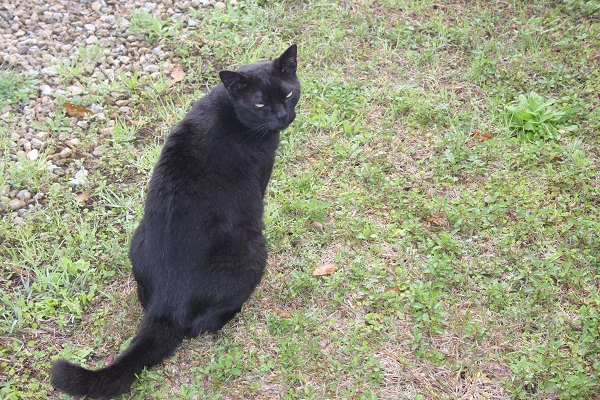
Well breeding and baby season seem to be in full swing from what this cat can tell. This time of year we suddenly start seeing the FedEx people every afternoon, the Docs are here working on mares at all hours of the day and night (this is my favorite part of breeding season), and supposedly cute baby pictures are greeted with squeals of joy. I have yet to figure out what is cute about a baby horse. I mean they don’t purr, they don’t claw you wanting a bottle, they don’t play with string. Humans are weird. I have learned more than I ever wanted to about making these babies as Head Cat at Springhill Equine. I know I talked about this recently but today I’m going to talk about how mares are weird and don’t do what they are supposed to.
There was once a veterinarian named Dr. Michelle LeBlanc. She was almost as famous as myself for her prowess at getting mares pregnant who really didn’t want to be pregnant. Dr. Lacher trained under her at the University of Florida. Cancer took Dr. LeBlanc from us way too soon but in the time she was here we did get some wise LeBlanc proverbs. Dr. Lacher’s favorite is: Reproduction is a gift not a right. And as soon as you doubt this, your mare will do something to prove how right this proverb is.
There are three main sources of frustration for our doctors: the follicle, infections, and semen issues. We will take them in order.
Follicles. A normal mare grows a follicle to about 35mm, gets some edema in her uterus which our Docs see on ultrasound, she gets a shot of Sucromate, and she ovulates 36-48 hours later. This timing lets our Docs order semen at just the right time, plan their schedules, and, with a little luck, make a baby. Because mares are mares (let’s be honest this applies to all horses), they often think it is great fun to do some part of this but not all. For instance, a mare will grow a 35mm follicle but won’t have edema, or, and this is a favorite, they will appear to do all the right things except for the ovulate part. This is where the crystal ball or Magic 8 Ball comes in. Dr. Lacher and Dr. Vurgason have to decide the best course of action. Most of this guess is based on knowledge of the hormone cycles, interpretation of ultrasound images, and what the uterus and cervix feels like, but a portion of the decision is a guess at what Mother Nature is going to do. Having spent a long time in school, and spent even more time after school keeping up on the latest research this is a VERY frustrating thing for doctors. I’m pretty sure the mares do this just to watch that frustration. I mean I would….
Next infections. Infections come from a couple of sources. The most common is simply the breeding process. Semen is seen as a foreign invader by the uterus so it tries to get that stuff out of there. The uterus does this by creating fluid and having contractions. The more I learn, the more I am seriously amazed that babies of anything ever happen. Normally, enough sperm survive this to get to the egg and the uterus cleans everything up and 14 days later our Docs see a baby. Sometimes the uterus over responds or, and this is very rare, there is bacteria in the semen. Either way, instead of a baby we see fluid in the uterus at 14 days. At this point our doctors use a special Q-Tip to determine what type of bacteria are growing and then treat the uterus directly with antibiotics.
The next source of infection is the outside world. I have heard, particularly from Dr. Lacher now that she’s over 40 (do not tell her I said that), that age is just a number. For mares who haven’t had a lot of foals this is true. For mares who have had more than five or six foals this isn’t so true. Carrying all those foals causes things to, how shall I say this, stretch. This means the normal defenses that keep bacteria out of the uterus aren’t as tight. It also causes the uterus to get larger, form some amount of scar tissue, and lose some muscle tone. Some of these problems can be corrected with surgery and some can’t. Our Docs can steer you in the right direction here.
The last source of problems is often the hardest to deal with. The boys. This is where I understand good communication between the mare and stallion owner are important. Communication isn’t something I’m good at so I claim no expertise here. I am much better at issuing orders. If stallions have issues then timing of the cycle on the mare end is even more important. It may also mean that a particular stallion and mare aren’t a good match. The Docs recommend that only one side of the relationship has issues if at all possible.
Whew, that was a ton of effort for this cat but breeding is tricky stuff and I do like to keep my adoring fans well educated. Shameless plug for my wonderful home: Our breeding packages make it easy and affordable to breed your mare. Contact my minions at the Clinic for more information.

Mar 15, 2016 | Allergies, Events, Infections, Pests, Skin Funk
Last week me and about 60 of my closest human friends learned just about everything there is to know on the topic of skin funk! I almost wish I were a horse just so I could try out these products on myself…but I’ll stick with being a cat for the superior intelligence. Thank you to MaryLu from Kinetic Vet for her excellent talk, and the folks at HorseSox for their demonstration. They really should start making CatSox tho…less knitting.
For those of you who didn’t come out to see me on Thursday: ouch. That really hurt my feline feelings. But I’ll be the bigger cat, let it go, and tell you what you missed!
There are several types of skin funk that horses can get. There is itchy skin funk, scratchy skin funk, buggy skin funk, sunny skin funk, fungus-y skin funk, and bacterial skin funk. Lucky us, we live in Florida, so most of these are going to be exaggerated by our awesome warm weather! The first step is recognizing when your horse has a skin problem. Skin funk can show up as hair loss, hives, welts, crusties, scabs, redness, or abnormal hair growth. The second step is calling me! Well, more specifically, Dr. Lacher or Dr. Vurgason. With their experience, they will be able to tell what type of skin funk you are dealing with, what the cause is, and how to treat it. The third step is using one of Kintetic Vet’s awesome products (plus HorseSox for lower leg skin funk) to get your horse’s skin back under control!
Dr. Vurgason’s favorite KineticVet product is the IBH salve. This is great for horses with Insect Bite Hypersensitivity (“I.B.H.”), and a little bit of salve goes a long way! Did you know there are 89 species of gnats (that’s not counting horse flies, mosquitoes, house flies, etc) that are probably going after your horse’s eyes, ears, mane, and tail!? Dr. Lacher’s favorite product from KineticVet is CK shampoo. This stuff is amazing for treating scratches, rain rot, and any other bacterial or fungal skin funk. Only a few treatments and the results are amazing! My favorite product is KineticVet’s new SB (sunblock). Not only does it provide sun protection for my delicate skin, but it also repels insects and contains aloe vera which makes it feel really good.
There was definitely a little something for everybody at Thursday’s seminar. Most notably, there was plenty of me! Stay tuned for our next “Come See Tony” event on Equine Nutrition, coming up in May. Until then, take care of that skin!
Mar 8, 2016 | Helmets, Injuries, Safety
Let’s talk brains. I know that cats have an overabundance of them and I understand you humans have been given some as well. The thing about brains is what you got is what you got so you better take care of what you got. Today we talk helmets. Yep helmets.
All day long I have to listen to how great these horses are. Some people even describe their horses as bomb-proof so they don’t need a helmet. Personally if a bomb goes near me you will see this black cat running faster than you ever thought a black cat could so I’m not sure why this is a good thing but I digress. Then I sit around at night reading the horse magazines and find out that Courtney King-Dye went to the Olympics in Dressage and fell off her horse at a WALK! A WALK! Her horse tripped and she fell off, landed on her head, and suffered a severe traumatic brain injury. Courtney is permanently debilitated from her injuries. A helmet would have meant she was a little sore and, maybe, a little bit of a headache and that’s it. Just a few weeks ago barrel racer, Lara Dewees, lost her life. Sure you can argue there were other factors involved there but a helmet may have helped. What I’m saying here is you guys have decided to sit on top of these crazy things called horses and accidents happen, so wear a helmet.
Now that I have convinced you to wear a helmet: let’s talk about helmet shopping. There are a ton of different brands out there. Try lots of them on. Some people have round heads, some people have oval heads, some people have long, oval heads. There’s dial-a-fit, adjust-a-fit, just fits on your head fit, shims, and more to get your hat to fit perfectly. Be sure the helmet you pick has a harness to keep it on your head and adjust said harness to keep the helmet on your head. It drives this cat crazy to see people with an excellent helmet on and a harness so loose even I could walk through the gap. A helmet must stay on your head when you hit the ground for it to work. Check the ASTM rating for your helmet. You will have to work hard to find a helmet that is not ASTM certified these days but just in case make sure the one you are looking at is tested. This means no helmets for other sports. Bike helmets don’t work the same as riding helmets!
If you need even more information on helmets there are some really great resources available: Riders4Helmets, ASTM.org, and SEInet.org. You only get one coconut, mind your melon, and value your head. In other words: Wear a helmet!

Mar 1, 2016 | Feed, Hay, Weight loss/gain
First a little business: Our latest #SpringhillEquine winner is June Begelman! Also, I had better see everyone next Thursday March 10th at 6:30pm for the Skin Funk Seminar. And now on to our main topic.
This past week has been sufficiently busy for my amusement. Dr. Lacher did a few dentals, ultrasounds for breeding, and a lameness exam. Dr. Vurgason took X-rays of a mini with a fractured face, and castrated another one of those cute (but loud) piglets. As I observe the horses that trail through the clinic, I have noticed a trend toward the slim, tucked-up, ribby look this season. Perhaps you too have noticed that your horse shed a few too many pounds this winter?
There are a few possible reasons for this phenomenon, but let’s rule out the easy ones first:
Has your horse had his teeth floated recently (at least within the last 12 months)? If not, he may not be properly chewing his feed for optimal nutrient absorption. Chewing is an important part of digestion, especially for animals who have to break down coarse feedstuffs like hay and oats. I much prefer bite-size pieces of tuna-flavored kibbles.
Has your horse been recently dewormed? In humans it is true that tapeworms living in the gut can eat the food intended for their host, and grow super long (disgusting!) In contrast, the internal parasites of horses cause weight loss by damaging the large intestine, which is where a lot of nutrient absorption normally occurs. Some parasites migrate through the blood vessels of the large colon, others encyst in the lining of the intestines. Either way, being “wormy” is definitely a reason why your horse could be losing weight. Maybe I should swallow a tapeworm to lose the rest of this holiday weight I’ve been holding onto…
Far and away the most common reason I see for skinny horses is something I like to call “a-groceri-osis,” or a lack of feed. So many horse owners are shocked when they hear how much grain our docs recommend for an underweight horse. I’m not talking about increasing your horse from 1 cup to two cups of Omelene 100. I’m talking 12 lbs (that’s two full coffee cans twice a day) of Triple Crown Senior. In my glory days, I could fit my whole body into a standard equine feed scoop.
For many of us, weight loss is difficult. But apparently for some creatures, weight gain proves more of a challenge. Keep in mind that you should always start with forage. Grass and hay should be the mainstay of any horse’s diet. As a carnivore, it’s hard for me to get on board with the green and leafy stuff, but they seem to like it. Next, it may be in your best financial interest to evaluate the type of grain you are feeding. Higher calorie does not necessarily mean higher cost. If you have a skinny horse, you will get more bang for your buck by switching to a Senior feed than feeding more of a Maintenance feed. My cat food is very expensive, but I’m worth it.
That being said, if your horse has had a dental, you have recently dewormed him, you believe you are feeding him enough to sustain an elephant, and he is still skinny, please have Dr. Lacher or Dr. Vurgason out to take a look! There are several other underlying medical issues that can cause weight loss in a horse; this is just what I’ve learned over the years from eavesdropping on the docs. Until next week, my friends!
Feb 22, 2016 | Eyes, Herpes, Infections
OK, I have had enough of Tony this and Tony that. I’m taking over this week. Welcome to Tuesdays with Teannie. That’s right, I’m the cuter and smarter cat at Springhill Equine, and this week I’m writing about eyes. I should point out I don’t have any, but that story is what makes me qualified to write this week’s blog.
I started life with two normal eyes. Along the way I got infected with a Herpes virus. Herpes is the same virus that causes rhinopneumonitis in horses. In horses and cats this usually presents as a bit of a cold. Sometimes it goes elsewhere and causes all kinds of problems. In horses, it can also cause abortions in pregnant mares and a neurologic disease. In cats, it can cause the immune system to attack the eyes. This is what happened to me. It took years and years, and Dr. Lacher tried pretty much every treatment available, but eventually they couldn’t save my eyes. Along the way I have become an expert in eyes.
I’m going to start with the obvious. If there is redness, swelling, or a lot of tears, call Springhill Equine. These are pretty good indicators of a problem, and the earlier a problem is addressed, the better the outcome (I lived on the streets for a while just trying to keep a roof over my head, so don’t judge me that I didn’t get proper care). To start, our Docs are going to use a special device called an ophthalmoscope to look in the eye. They claim this is to get good light and magnification. Personally, I think they like shining a bright light in my eye to torture me. I get back at them by standing in front of computer screens and stepping on keyboards. Next a special stain called flourescein is put in the eye. This stain shows if any of the surface layer of cells is gone. You want a negative flourescein result. Negative here means all is good. Positive means you have long nights and days, or your horse has an all-expense-paid trip to Springhill Equine.
With their big bug eyes set on the side of their heads and their propensity to stick their heads where they don’t belong and then get scared, horses are very prone to ulcers. So that’s problem number one with horse eyes. Next, we live in Florida and we grow fungus here. Put bug eyes and fungus together and chaos follows. This is why if you call with a question about an eye, our Docs freak out a little bit and move the Earth to get you on the schedule that day. All eyes get treated like they have a bacterial and fungal infection, no matter what. They also get a wee bit obsessive-compulsive about rechecking the eye to make sure it’s going to the right direction. Treatments are sometimes done every hour!
Sometimes horses, and let’s be honest, cats, are… umm… difficult to treat. Eye treatments sting! The Docs have a few tricks up their sleeves to help. They always give horses (and this cat) treats with EVERY eye medication. They also have a device called a sub-palpebral lavage system. Using a really, really big needle, they put a long tube through the eyelid which lets you stand at the withers to inject medications which are then delivered to the eye.
If the worst happens and the eye can’t be saved, then a procedure called an enucleation is performed. This is the fancy word our Docs use for taking the eye out. Here’s where my experience comes in. Please do not worry about your horse missing an eye. I lost my left eye first and certainly didn’t miss it a lick. In fact, without the constant pain, I was loving life. I would run around and attack Tony, chase my tail, and knock papers off the desk. When my right eye began hurting, I was back to moping around the clinic. Dr. Lacher decided to let me slowly go fully blind so I could better adjust to life with no eyes. Once they removed my right eye, I was right back to running this joint. I still stalk Tony, I still stand directly in front of the computer screen, I know exactly where the escape key is on the keyboard, and I am loving life as the smart cat at Springhill Equine. Moral of this story: if you think something is wrong with your horse’s eye, call Springhill Equine!


You must be logged in to post a comment.