Sep 9, 2015 | Ailments, Cushings, Disaster Preparedness, Laminitis, Leg issues, Pet Pigs

Well Tuesday was so crazy I didn’t manage to catch up until Wednesday! The day after a long weekend is always hard on management. I have spent the weekend ensuring sunbeams are properly tracked across the floor, making sure the chairs don’t move in the office, and knocking any stray papers off the desk. Meanwhile, Dr. Lacher was busy seeing emergencies all weekend. Actually you guys were pretty nice to her and she only had to see a few. Dr. Lacher and Dr. Vurgason don’t really mind emergencies when they are true emergencies. The only time I hear them upset is when the horse has been very sick for a while and the humans wait until 10:30pm on a Saturday night to call but I digress.
One of this weekend’s emergencies was a common Fall problem: laminitis. Why Fall you ask? Well let me answer. This time of year your crazy horses are getting ready for Winter. That’s right: Winter. The brain of the horse is tuned to seasons in a very particular way. It has to change the metabolism, hair growth, foot growth, and a million other little tweaks so that the system is ready for whatever the coming season will require. Horses, having evolved in cold climates, start getting ready for Winter around August 15th. To do this the pituitary gland increases its production of about 5,000 different hormones. All is fine and dandy unless your horse also has Cushing’s or is pre-Cushingoid. If that’s the case too many hormones are released and voila!! Laminitis happens.
The good news is these laminitis episodes are relatively minor, even if sometimes they don’t look that way, and are quickly controlled with some anti-inflammatories like bute or previcox, a little help from some thyroid hormones, and changes in trimming or shoeing. Knowing your horse’s ACTH levels if they are a suspected Cushing’s horse helps the Docs manage these guys if they experience a flare up.
In other goings on this week, Dr. Vurgason treated another one of those things called a pig at the office. They really are rather adorable until they open their mouths. I was grateful she anesthetized him so that she could perform a castration. Dr. Lacher saw several horses for lameness, along with a few dentals and other routine health stuff. I think she might get some kind of perverse pleasure from making her technicians run around in circles since she makes them do that a lot! She claims this is so she can watch the horses move after stressing different parts of their bodies but I have my doubts.

Sep 3, 2015 | Castration, Cryptorchid, Vaccines
Tuesdays with Tony
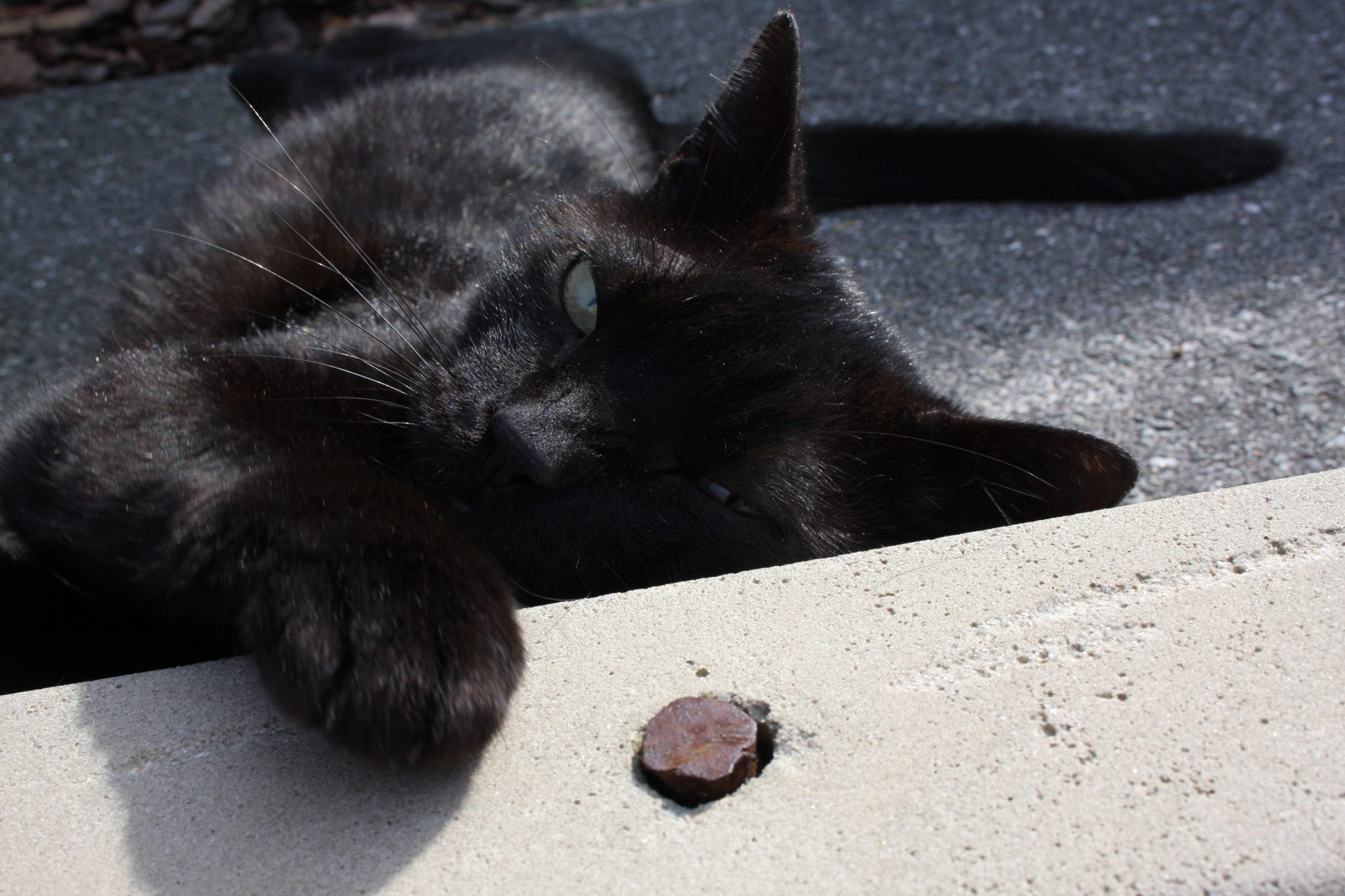
As you can see, I’m having to rest up from the past week. Not only did I have to supervise the doctors this week but I spent a lot of time watching the phones. I don’t answer them. I only watch them, from behind closed eyes. I’m not really in to helping people when they call so I just don’t answer. Besides managing the front desk, I assisted with quite a few fecal parasite egg counts this week. I enjoy sitting on the counter assisting in any way I can while Beth, Nancy, or Charly perform these really import tests. Basically they take a bit of poop, mix it with some stuff, centrifuge it, let it sit for a while, then count how many worm eggs they see. Apparently this tells them how often horses should get dewormed. They tell me most people deworm too often and their counts are generally very low indicating twice yearly deworming. I pretend to listen while they tell me this. It makes the humans feel more important than they actually are.
I have really enjoyed the crypt-orchid (testicle stayed too high and had to be dug out) surgeries we seem to be making a habit of on Mondays. The doctors said the last two had both their testicles in the abdomen which seemed to make them excited. They said it’s relatively rare to have this happen. I felt they should scratch behind my ears while they told me all this. Luckily both horses had great owners since these horses could easily have been passed on as geldings to some unsuspecting person.
Coby has required a lot of intense management from the cat. Last week Dr. Lacher and Dr. Vurgason put amnion on his wounds. This is a specific part of the placenta which is resistant to infection, has anti-pain properties, and helps the wound heal with growth promoters. I must admit even the cat is impressed. We did this last week and again yesterday. I have attached some pictures so you guys can see what a little cat supervision gets done. I am pretty darn impressive. By simply watching I have really gotten this wound healing well.
One final word of wisdom from the cat: vaccinate your horses. We have Eastern Encephalitis in the area. The vaccine is about the cheapest thing you can do and is nearly 100% effective. When Springhill Equine gives it you have a guarantee from the manufacturer. If your horse gets encephalitis they will cover treatment costs. Vaccinating for encephalitis is about as sure a thing as finding me taking a nap in a sunbeam.

Aug 27, 2015 | Castration, Cryptorchid, Dentals
Waiting for RJ to wake up
They sure do require a lot of supervision around here. The doctors have been busy with all kinds of stuff this week. There have been lameness exams, dentals, ultrasounds of tendons and ligaments, necks, and backs. Dr. Vurgason ultra-sounded a 14 day pregnancy which was pretty cool. Monday I supervised a rare bilateral crypt-orchid surgery. That is fancy doctor speak for both testicles were in the abdomen instead of down where they are supposed to be. According to Dr. Lacher it’s usually only one that stays where it’s not supposed to and the other is normal. That is him in the background sleeping like a baby after surgery.
We have also seen some routine care this week at the office. I enjoy these visits since it gives me a chance to really connect with my fans. I get to spend some quality time visiting with them, chatting about what they are up to with their horses, getting my ears scratched, talking about how great I am, marveling at my beautiful yellow eyes, shiny black coat, and wonderful athletic physique. Dentals are my favorite routine appointment since this is often when I get the best ear and chin scratches while the docs and techs are busy with the horses in the stocks. I also feel that I do my best supervising with dentals. I watch as the doctors examine the horse, then administer sedation, place the big thing in their mouth that holds it open, and put a funny looking light on their heads. From there they carefully examine every tooth before performing the dental float.
There has been lots of discussion around the office about management of Coby’s wounds. In case you haven’t been checking in with me regularly, Coby has some very serious wounds to his hind legs that the docs are intensively managing. I am learning that these wounds go through many different phases and require different things at different times. Right now they are figuring out which pieces of skin aren’t going to make it and how best to cover the wounds as they heal. Coby’s body is beginning to move from the clean up phase to the wound healing phase. The start of that is called contracture. The tissue around the edges will slowly constrict around the wound as it grows until the wound is covered. Out in front of that contracture is granulation tissue. Little baby skin cells will then start migrating across the granulation tissue. Skin cells are very particular about how and where they travel. They like flat, moist areas. So the docs have to work on keep the wound wet but not too wet, covered but not too tight, clean but not scrubbed too hard, all while keeping infection in the surrounding tissue under control. In a wound like this the docs also have to make sure the bone stays wet or it will dry out and be VERY unhappy. Tomorrow we are going to do a lot of work on Coby so I’m off to rest up for a long, tough day of supervising Springhill Equine.

Aug 24, 2015 | Allergies, Coughing, Lameness, Laminitis, Leg issues
Please be sure to check your trailer floor for rotten areas. Many of you saw this horse on our Facebook, Instagram, and Twitter feeds. Dr. Lacher and Charly pieced him back together and now begins the healing. He is looking at several months of bandaging but with some luck he will be back to good soon.
Main Topic:
The sun is just peeking over the horizon in the morning as you head out to feed your horse. You open the feed can, scoop out the morning ration, and dump it in the feed bucket. As you walk away you hear a dry, raspy cough. “Probably just the dusty grain,” you think and remind yourself to ask Springhill Equine about it the next time they come out to the farm. What does that cough really mean? Allergic airway disease.
Allergic airway disease has had a bit of an identity crisis over the years. It has been called: Heaves, asthma, Chronic Obstructive Pulmonary Disease (COPD), heaves (again), and currently Recurrent Airway Obstruction (RAO). All of these are our fancy names for constriction of the small airways in the lungs due to allergies. The allergic response causes an increase in mucous in the airway and makes the muscles around those same airways tighten up. It’s an unfair combination which makes it very difficult to breath.
So why the dry cough? These horses typically breathe in fairly well but can’t breathe out without pushing extra hard. We call this abdominal breathing. One way these horses manage to get a good breath out is by coughing. The other thing that leads to coughing is called airway hyper-reactivity. This means anything that touches the airway causes a coughing fit. Dust from grain and/or hay is the most common cause of coughing at feeding time for allergic horses.
Recently there has been a lot of research on these allergic airway horses. Sadly much of it has not progressed to finding new treatments, but we are learning more about the genetics behind allergies, what different symptoms mean, and how well currently available treatments do work. Most older research focused on the effects of allergic airway disease on the racehorse only. Here are the highlights of a few recent papers. If you hear your horse coughing on a regular basis chances are very good they have allergic airway disease. Allergic airway horses are statistically way more likely to have hit this wonderful genetic trifecta: allergic airway disease, allergic skin, and Anhidrosis (non-sweating). Dexamethasone works well in most allergic airway horses but not all. For the horses Dexamethasone does not work on, inhalers provide a safe and viable option.
Treatment is targeted at reducing the allergic response. Dexamethasone is a short acting (about 24 hours) steroid that can be given by injection or orally. Especially during the summer Springhill Equine Doctors will usually start horses on Dexamethasone to get symptoms under control. Typically the dose starts very high and tapers every few days until we find what makes your horse happy. Changes in the weather, pollen levels, and dustiness of hay or grain may require a brief increase in Dexamethasone dosages.
For horses who are unable to tolerate Dexamethasone or don’t respond to it, metered dose inhalers can be used. Steroid inhalers are used most commonly for human asthma. Inhalers present some challenges for horse owners. First how do you get your horse to breathe deeply when you want them to? Answer: you don’t. Second, inhalers can be very expensive and time consuming. To solve the first problem we use an extender which seals over one nostril that allows us to time the “puffs” with the horse’s breathing. For the second problem we discuss options with you, the horse owner, and come up with the best solution.
Once winter comes around Intradermal Allergy Testing can be performed. Allergy testing allows us to identify what allergens bother your horse. Once we know what bothers your horse most we can begin shots, which over time teach the immune system to tolerate those allergens. Allergy shots can offer real help to allergic airway horses but it takes time. It is generally well towards the middle of the second year of therapy before we see benefits. But those are fantastic benefits. We are able to reduce the length of time and dosages of drug therapy these horses are on.
Moral of the story: if you heard a cough, give us a call. The better we control allergic airway disease the longer your horse stays happy, healthy, and ride-able.
Erica’s Corner
Whew! There I did it. I took a breath!!! I am very glad to have Dr. Vurgason here and settled in. It means I get to sneak away to the beach for a long weekend. I am ready for slightly cooler weather so my non-sweater starts sweating again and a little less rain so her constant rain rot can catch a break but such is summer in Florida. The extra breathing room has also meant my two younger horses are getting ridden more. I have seen this as a blessing and a curse all at the same time. I love the way younger horses advance so quickly as they learn the big lessons of life but I hate teaching them! They are sometimes painful lessons for the rider…..
Tech Spot
Springhill Equine is here to help you through any and all lameness issues your horse might be having, whether it is painfully obvious or ever so subtle, we can help! Dr. Lacher’s extensive background in performance horse lameness coupled with all of our new technology makes Springhill Equine your one stop solution for lame horses and ponies. After performing a lameness exam, flexing and blocking if necessary we also can utilize our digital X-ray and ultrasound machines to pin point the issue and develop the quickest most effective rehab program for your horse. Once the source of the issue is revealed there are several new procedures we are performing to help speed up the recovery process and keep our horses performing longer including IRAP, PRP, and FES. If you are at all concerned about one of your’s limping or even just feeling a little funny please don’t hesitate to call!

Aug 18, 2015 | Ailments, Breeding, Disaster Preparedness, Feed, Infections, Injuries, Leg issues
Tuesdays with Tony
Whew what a week! Yesterday was Black Cat Appreciation Day and my hordes of adoring fans came by to give me offerings. I am sure you all appreciated the Black Cats in your lives yesterday but if not we may still be adored today.
Many of you saw the pictures yesterday of the hind legs of a horse who went through the floor of a trailer. Luckily the trailer wasn’t moving at the time. Dr. Lacher and Dr. Vurgason have a long road ahead of them taking care of that guy. The first step will be seeing how much of the skin survives the first week. About half of what you see will survive; the other half will need to be trimmed off. Next week sometime they will remove the sutures and re-suture the wounds to try to get better coverage. After that it’s bandaging, bandaging, bandaging. I think regular cat scans will also be in order to be sure all is going appropriately.
The rest of the week was jam packed. Last week something called a pig came in to the office. Some may think those are little and cute but I have my serious doubts about that. It made a very loud noise when I sniffed it. Dr. Vurgason loves these things called pigs so I will likely be supervising more and more care. I have put in a request for earplugs. Dr. Vurgason does routine pig care including vaccinations, castration, nutrition, and Wellness Care.
It was a very busy and diverse week here around Springhill. I supervised Dr. Lacher doing something called IRAP on a horse with a lameness in a hind leg. IRAP is this amazing stuff that actually comes from the horse. Dr. Lacher draws blood then does some special processing which increases the concentration of IRAP and then injects that back in a joint that has pain or inflammation. It about requires a PhD to understand but luckily I am a cat so naturally I know everything. The horse she used it on this week had an infection in a joint in his leg. The infection was aggressively treated and fixed but the body was over-reacting and causing the joint to be painful. IRAP will help calm down all that inflammation like a cat purring on your lap.
Meanwhile in the office, Dr. Vurgason did a few dental floats and some breeding work. Being neutered since I was a little tyke I know nothing of this breeding thing. They assure me my life is better but I have my doubts. I ended the week making sure Charly correctly drew blood for an Oral Sugar Test. This test determines if a horse is responding to sugar correctly or if they have Metabolic Syndrome. I told the horse I hope she doesn’t have it since it sounds like exercise and a diet are involved and those are two words I do NOT like to hear. In preparation for another busy week I am now..



You must be logged in to post a comment.